
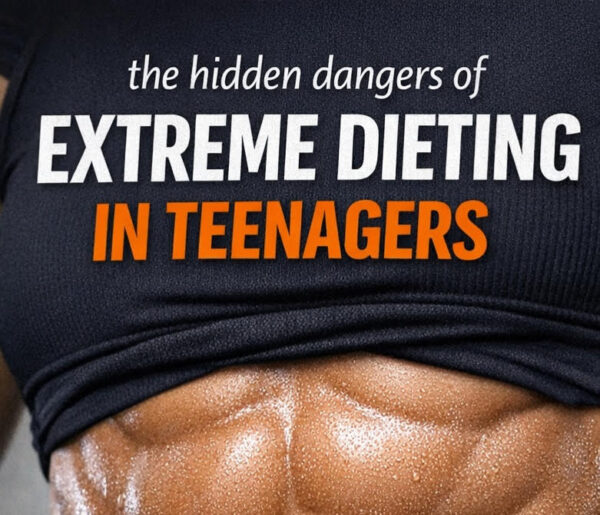
In recent years, social media has popularised bodybuilding trends such as “cutting,” “shredding,” or achieving extremely low body fat. While structured nutrition strategies can be useful for adult athletes, severely restricting calories during the teenage years can be harmful…
Explaining this to my teenage son recently gave me an idea to create a blog to give other parents (and their teenage kids) a little more info, help and support. I’ve always encouraged my kids to eat a healthy balanced diet and exercise, and very proud that they include it as an important part of their life, but with GCSE exams coming up this year, I needed to point out the importance of good quality nutrition, balanced diet and exercise for the physical and mental health. Hopefully this might be helpful to others.
Adolescence is one of the most important periods for physical growth, brain development, and hormonal maturation. When teenagers drastically reduce their calorie intake in pursuit of aesthetic goals, they risk impairing both their physical health and mental development.
Adolescence Is a Critical Growth Period
Teenagers require more energy and nutrients than adults because their bodies are still developing. During puberty, the body is building bone mass, developing muscle, regulating hormones, and supporting brain maturation.
Research published by the Proceedings of the Nutrition Society highlights that adolescence is a crucial stage for physical and cognitive development, where adequate energy and micronutrient intake is essential.
Even moderate reductions in energy intake during adolescence can slow normal growth. Studies published in Paediatrics & Child Health suggest that marginal energy deficits may impact growth velocity and normal developmental processes.
When teenagers attempt aggressive “cutting” diets similar to those used by competitive bodybuilders, potential risks include:
Slowed or stunted growth
Hormonal disruption
Reduced bone density
Delayed puberty
These effects can sometimes have long-term consequences.
Restrictive Dieting Can Lead to Nutrient Deficiencies
Extreme bodybuilding diets often focus heavily on protein while significantly reducing carbohydrates or overall calorie intake. While protein is important for muscle development, focusing on one nutrient at the expense of dietary variety can create imbalances.
Teenagers who restrict calories often consume fewer fruits, vegetables, and whole foods, which may result in deficiencies in essential nutrients such as:
Iron
Calcium
Zinc
Magnesium
Vitamin D
Folate
Iron deficiency can cause fatigue and reduced cognitive performance, while insufficient calcium during adolescence may increase the risk of bone health issues later in life.
Research also shows that adolescents who diet frequently tend to have poorer overall nutrient intake and lower diet quality compared with those who eat a balanced diet.
The Teenage Brain Needs Energy
The brain requires a constant supply of energy to function properly. During adolescence, areas responsible for decision-making, impulse control, and learning are still developing.
When calorie intake becomes too low, teenagers may experience:
Brain fog
Difficulty concentrating
Reduced attention span
Memory problems
Slower information processing
For students preparing for exams or trying to focus in school, under-fueling the body can significantly affect academic performance and concentration levels.
Nutrition plays a key role in supporting memory, attention, and cognitive performance during the teenage years.
Restrictive Dieting Increases the Risk of Eating Disorders
Another major concern with extreme calorie restriction during adolescence is the increased risk of developing eating disorders.
Research from the National Eating Disorders Association shows that dieting is one of the strongest predictors of future eating disorders among teenagers.
Studies have found that adolescents who engage in restrictive dieting are significantly more likely to develop disordered eating behaviours, including:
Obsessive calorie counting
Binge eating episodes
Severe food restriction
Fear of certain foods
Compulsive exercise
These behaviours can develop into serious eating disorders such as:
Anorexia Nervosa
Bulimia Nervosa
Binge Eating Disorder
Eating disorders are not simply about food or weight—they are complex mental health conditions that can have serious physical and psychological consequences.
Adolescence is a particularly vulnerable time because body image, identity, and social pressures are still developing. Exposure to unrealistic body standards online can increase the risk further.
Bodybuilding “Shredding” Diets Are Designed for Adults
Competitive bodybuilders often use aggressive calorie deficits in the weeks before competitions to reduce body fat to extremely low levels.
However, these strategies are typically designed for fully grown adults whose bodies have completed development.
Teenagers are still undergoing:
Skeletal growth
Hormonal maturation
Brain development
Muscle and tissue development
Restricting calories too severely during this stage can force the body to prioritise basic survival functions over normal growth and development.
Healthy Fitness Goals for Teenagers
Teenagers who enjoy fitness or strength training can still pursue their goals safely.
Personally I recommend focusing on:
Eating enough calories to support growth and exercise
Consuming balanced meals with carbohydrates, proteins, and healthy fats
Eating a variety of whole foods including fruits and vegetables
Avoiding extreme dieting trends seen online
Prioritising long-term health over short-term aesthetics
Fitness during adolescence should be about strength, health, and building sustainable habits, not extreme dieting or achieving unrealistic body standards.
Conclusion
Although it’s great to see our kids wanting to get in good shape, the bodybuilding culture often emphasises cutting calories to achieve a lean physique, extreme calorie restriction can be harmful for teenagers.
Restrictive dieting during adolescence may lead to:
Slowed growth and hormonal disruption
Nutrient deficiencies
Reduced concentration and academic performance
Increased risk of eating disorders
Long-term physical and mental health consequences
For teenagers interested in fitness, the most important goal should be supporting a healthy and developing body through balanced nutrition and realistic expectations.
If you have teenage kids? Encourage them, support them, educate them. Exercise and nutrition has so many benefits for their development, just make sure it’s not to an extreme.
Hope you found it helpful