
Sugar cravings are one of the most common challenges people face when trying to improve their health or lose body fat. They can feel random, overpowering, and frustrating — but they’re not a sign of weakness. They’re a biological response shaped by hormones, habits, stress, and even sleep.
Understanding WHY cravings happen is the first step to beating them.
Why We Get Sugar Cravings
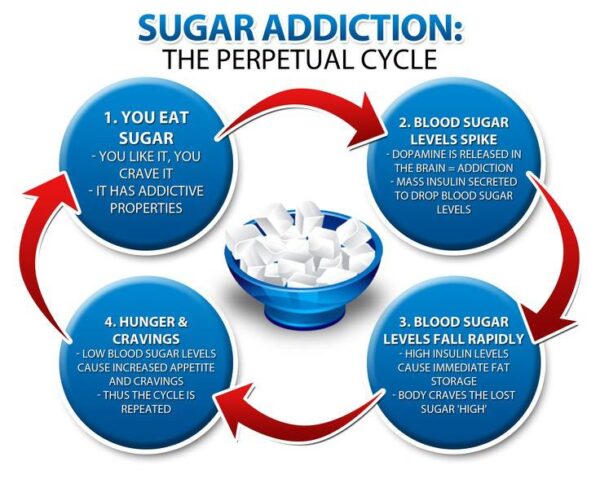
1. Blood Sugar Peaks and Crashes
When you eat sugary or highly processed foods, your blood glucose spikes quickly. Your body responds by releasing insulin to bring it back down — often too far down.
That crash triggers your brain to shout: “More sugar, now!”
2. Dopamine and Reward Pathways
Sugar lights up the brain’s reward system.
The more often you eat it, the more your brain learns to seek that quick hit of pleasure.
3. Stress and Cortisol
High stress increases cortisol, which drives cravings for quick energy foods — especially sweet, high calorie options.
4. Lack of Sleep
Poor sleep disrupts hunger hormones:
– Ghrelin (hunger) goes up
– Leptin (fullness) goes down
Your tired brain then craves fast energy: sugar.
Boredom, sadness, anxiety, and even celebration can trigger cravings because sugar temporarily boosts mood.
The Damage Too Much Sugar Causes…
Excess sugar doesn’t just affect your waistline — it impacts your entire body.
1. Increased Fat Storage
High sugar intake raises insulin levels, which promotes fat storage, especially around the stomach.
2. Chronic Inflammation
Regular sugar spikes contribute to inflammation, which is linked to:
– Joint pain
– Fatigue
– Skin issues
– Long term disease risk
3. Hormone Disruption
Sugar affects appetite hormones, making it harder to feel full and easier to overeat.
4. Gut Health Imbalance
Too much sugar feeds harmful gut bacteria, which can worsen cravings and digestion.
5. Energy Rollercoaster
Sugar gives a quick high followed by a crash — leaving you tired, irritable, and craving more.
Negative Effects on Fat Loss
If fat loss is the goal, sugar can be a major roadblock.
1. Sugar Stops Fat Burning
High insulin levels switch your body from “fat burning mode” to “fat storing mode.”
2. Increased Hunger and Snacking
Sugar doesn’t satisfy you — it makes you want more food, more often.
3. Reduced Training Performance
Energy crashes make workouts feel harder and recovery slower.
4. Hidden Calories Add Up Fast
Sugary drinks, sauces, snacks, and “healthy” bars can easily add hundreds of calories without filling you up.
Top Tips to Reduce and Control Sugar Cravings
These strategies actually work — and they’re sustainable.
1. Prioritise Protein at Every Meal
Protein stabilises blood sugar and keeps you fuller for longer.
Aim for:
– Eggs
– Greek yoghurt
– Lean meats
– Protein shakes
2. Don’t Skip Meals
Long gaps between meals cause blood sugar dips that trigger cravings.
3. Stay Hydrated
Dehydration can feel like hunger or sugar cravings.
Drink water first — then reassess.
4. Manage Stress
Try:
– Walking
– Deep breathing
– Stretching
– Journaling
– A quick workout
Lower stress = fewer cravings.
5. Improve Sleep Quality
Aim for 7–9 hours.
Better sleep = better appetite control.
6. Choose Smart Sweet Swaps
Instead of chocolate bars or pastries:
– Fruit
– Dark chocolate
– Greek yoghurt with berries
– Protein snacks
7. Don’t Keep Trigger Foods in the House
If it’s not there, you can’t eat it during a craving spike.
8. Increase Fibre Intake
Fibre slows digestion and stabilises blood sugar.
Think: veggies, oats, beans, whole grains.
9. Break the Habit Loop
If you always reach for sugar at:
– 3pm
– After dinner
– When stressed
Replace the behaviour with something else — tea, a walk, gum, or a high protein snack.
10. Be Consistent, Not Perfect
You don’t need to eliminate sugar completely.
You just need to control it — not let it control you.
Final Thoughts
Sugar cravings are normal, but they don’t have to run your life. With the right habits, balanced meals, and a bit of awareness, you can reduce cravings, improve your energy, support fat loss, and feel more in control of your choices.